
The Comprehensive Guide to Hearing Loss
Helpful information, expert guidance, and compassionate support to help you better understand hearing loss and your options
Even relatively mild hearing loss can seriously disrupt how we interact and connect with others. Without healthy hearing, the consequences for our social and mental health and physical health in some cases become greater, and overall quality of life can plummet.
Hearing is Our Most Critical Sense for Communication with Others
Healthy hearing requires a number of processes in the inner ear and brain to work properly in order to correctly interpret the sounds we hear. Inner ear problems, or ear problem generally can prevent crucial pieces of sound information from reaching the brain, leading to confusion and inability to understand what is being said.
Commonly, an ear problem in the outer or middle ear is referred to as a conductive hearing loss, while inner-ear problems or brain-processing difficulties are referred to as sensorineural hearing loss. These re two distinct types of hearing loss with different treatment methods.
Why Binaural Hearing is Important
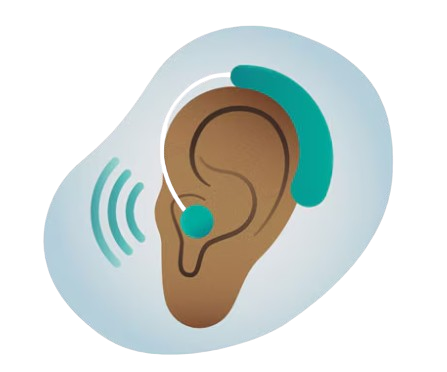
Binaural hearing refers to the brain's ability to integrate information from both ears at once, which greatly improves overall communication and the ability to understand where sounds come from in relation to your body's position.
Hearing with both ears helps us listen in noisy, complex environments and to hear speech sounds in noise.
Three Types of Hearing Loss
Sensorineural Hearing Loss
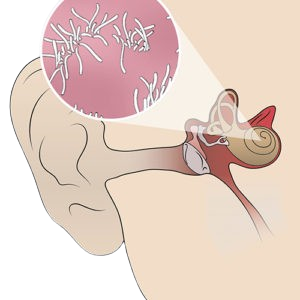
The most common type of hearing loss, SHL is typically the result of damage to the delicate hair cells in the inner ear organ (the cochlea) that are responsible for picking up sounds. When these hair cells — or the nerves they connect to — are damaged or destroyed by repeated exposure to loud noise, hearing becomes more difficult. Because hearing damage usually affects the highest frequencies first, loud-noise exposure can result in permanent high-frequency hearing loss.
Conductive Hearing Loss
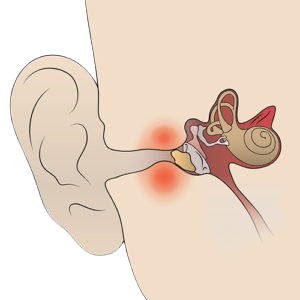
This is a type of hearing loss that is typically the result of an infection or blockage in the outer or middle ear. Otitis media (middle-ear infections) can sometimes cause difficulty hearing due to a fluid buildup. Swimmer’s ear or a buildup of earwax may create a blockage outside the eardrum. This type of hearing loss is typically reversible once the infection or blockage clears, or once necessary surgery is performed.
Mixed Hearing Loss
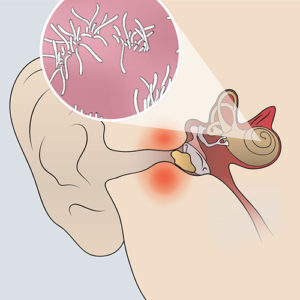
Individuals with mixed hearing loss typically suffer from some combination of SHL and a superimposed conductive hearing loss, such as a malfunction of one of the ossicles (tiny bones that conduct sound) in the middle ear. Hearing may improve after the conductive portion of the hearing loss is resolved through treatment or surgery. SHL is usually permanent.
Other Forms of Hearing Loss
Unilateral Hearing Loss
Hearing loss that occurs in only one ear. It can occur gradually or suddenly
Sudden Hearing Loss
A sudden loss in hearing, either entirely or partially, within a 24-hour period or immediately.
High-Frequency Hearing Loss
Difficulty hearing high-pitched sounds like “s,” “f,” and “th.” This is one of the most common types of hearing loss.
Age-Related Hearing Loss
Gradual hearing loss that typically develops with age over time.
Frequently Asked Questions
-
Yes. Hearing loss caused by blockages or infections are often treatable. Other types may be permanent, but can still be greatly improved with the right care and technology.
-
Yes. Untreated hearing loss can lead to communication struggles, social withdrawal, and mental fatigue—and may impact overall cognitive health over time.
-
It can happen at any age, but it’s more common from your 40s onward. Factors like noise exposure and genetics also play a role.
-
Start with a professional evaluation. From there, solutions may include treatment, hearing devices, or simple adjustments based on your needs.
-
Protect your ears from loud noise, keep volume levels moderate, and schedule regular hearing checkups.
-
Sometimes. Genetics can play a role, but lifestyle and environmental factors also have a big impact.
-
Act quickly. Sudden hearing loss is urgent and sometimes permanent loss can be prevented. We recommend seeing a licensed medical physician who specializes in diseases of the ear, like and ear, nose and throat doctor (ENT). Call us for recommendations and referrals.
-
Generally, medical grade prescription hearing aids cost between $2500 an $7500, depending on the severity of your hearing loss, your lifestyle, your budget, and your sound preferences.
-
Over the Counter Hearing Aids are budget oriented sound amplifiers that sometimes work for people with a mild to moderate hearing loss that aren’t ready for the commitment of a full medical-grade prescription hearing aid. There are many varieties. Contact us for more details if interested.
-
No, we have financing options available (including 0% interest options) and we genuinely have a passion for helping people hear better. We can find a way to make things work. Please contact us for more details.
-
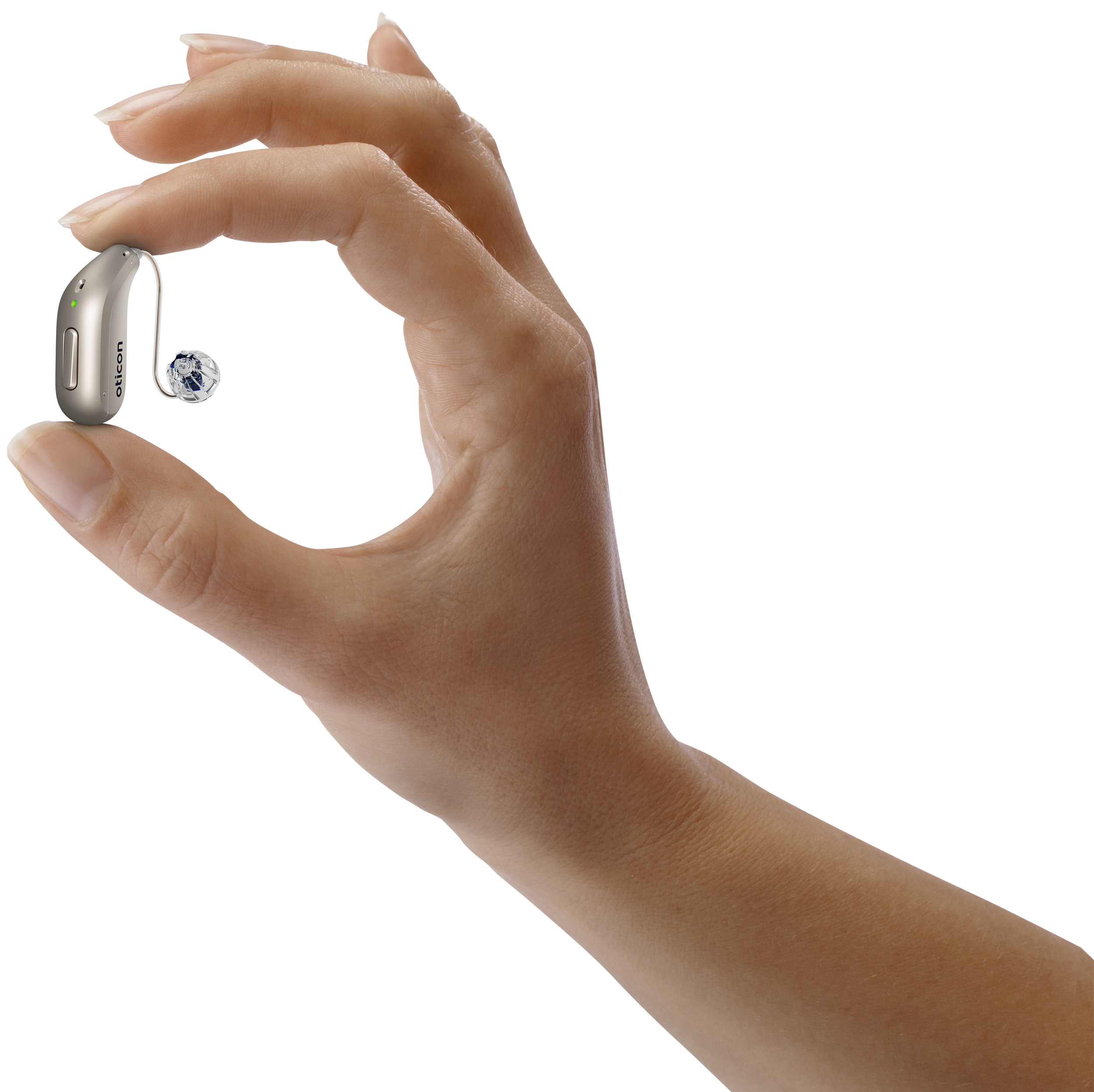
We primarily fit Oticon hearing aids because we believe they generally provide the best solutions for the most patients, but we are experts in fitting Resound hearing aids as well. We are constantly learning about new technologies as they arrive, and will shift focus as better solutions present themselves. Interested in a particular model or brand? Give us a call and we can discuss it.
-
Yes! David Neumann is still one of our providers and is working part time alongside the new owner, Jonathan Schneider, to ensure the same standard of care you have come to love with The Hearing Connection. We will hold on to him for as long as he is willing to stay. He is the heart and the foundation of The Hearing Connection. He seems to be having a lot of fun in semi-retirement playing with his grandkids and working on the farm!
-
Yes! We have moved across the parking lot to 3906 Sherman Ave into a larger and nicer space. This provides us room for future growth and other opportunities to create more value for our patients and community.